Leave Your Message
-
Phone
-
E-mail
-
Grace Che
-
Amy Wu
-
Emily Sun
China’s apparel industry offers varied options for sourcing a Pleated Faux Leather Skirt. Suppliers differ in material quality, production scale, pricing, and customization support. This guide introduces ten notable Chinese suppliers for buyers seeking dependable manufacturing partners. The selection should not be treated as a universal ranking. Supplier performance changes with season, order volume, and production capacity.
A reliable evaluation begins with physical samples. Buyers should inspect pleat recovery, waistband stability, lining comfort, and surface resistance. A well-made skirt should retain its shape after repeated movement. Details matter. Sample testing can reveal cracking, uneven pleats, loose stitching, or color transfer. These issues may remain invisible in polished catalog images. Factory communication also deserves careful review. Clear specifications, realistic lead times, and transparent minimum order quantities reduce avoidable risks. Suppliers should provide accurate material descriptions and relevant quality documentation. Responsible sourcing includes checking labor practices, chemical safety, packaging, and destination-market requirements. Requirements vary by country. Professional buyers may request pre-production samples, inspection reports, and written approval procedures. Price alone is a weak decision tool. Lower costs can reflect thinner materials, limited quality control, or less reliable after-sales support. A practical comparison should consider total landed cost and long-term consistency. Some supplier information may become outdated, so independent verification remains important. This guide offers a structured starting point, not a guarantee. Careful questions still matter. Through balanced research, buyers can identify Pleated Faux Leather Skirt suppliers that match their quality expectations, brand identity, and commercial goals.
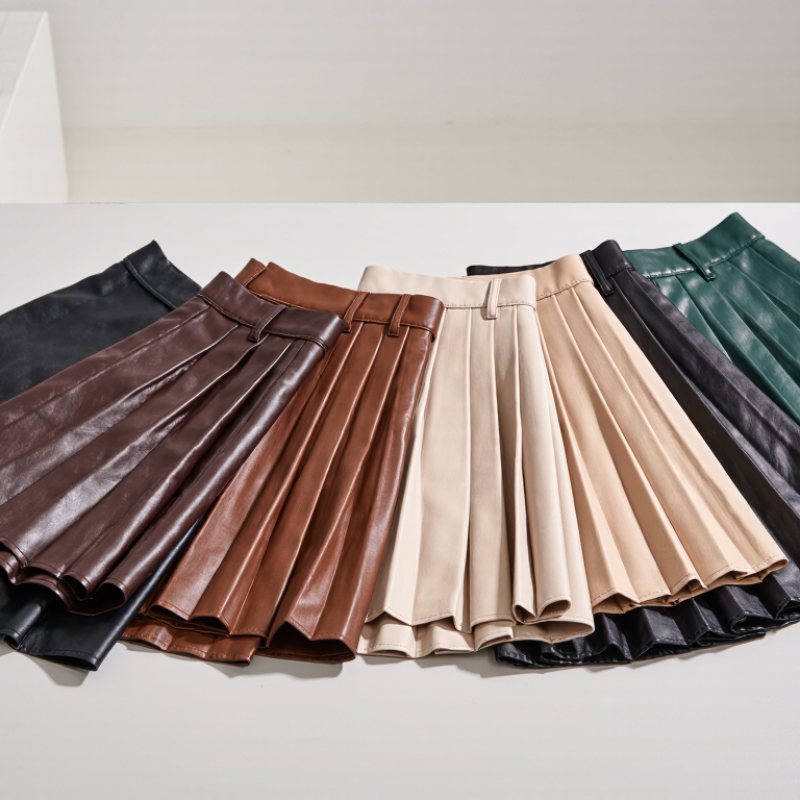
A reliable Chinese pleated faux leather skirt supplier proves capability through consistent production, not attractive photos. Grand View Research reports that the global synthetic leather market is expected to grow steadily through 2030. This growth increases supplier choices, but quality differences remain visible. Ask for recent samples, material specifications, and factory inspection records. The skirt should show even pleats, clean waistband stitching, and smooth coating without strong chemical odour.
According to Textile Exchange’s Materials Market Report 2024, polyester represented about 57% of global fibre production in 2023. This matters because many skirt linings and sewing threads use polyester. A professional supplier should identify the shell, backing, lining, and recycled content clearly. Request test results for colour fastness, seam strength, abrasion, and coating flexibility. Independent testing adds credibility. It also reduces costly surprises during bulk production. My own quality checks would include folding the skirt repeatedly and examining the pleat recovery after steaming. One imperfect sample can reveal more than a catalogue.
Tips: Confirm the minimum order quantity, sample timeline, and correction policy in writing. Visit the factory or arrange a third-party audit when possible. Check whether the supplier uses inspection points before cutting, sewing, and packing. Do not judge reliability by the lowest quotation. A cheap coating may crack after a few wears. I would also request a small pilot order first, because even experienced suppliers can miss details when specifications are vague.
| Rank | Supplier Profile | Typical Manufacturing Area | Core Product Capability | Faux Leather Options | Recommended MOQ | Sample Lead Time | Bulk Production Lead Time | Quality & Compliance Evidence | Customization Support | Reliability Score |
|---|---|---|---|---|---|---|---|---|---|---|
| 1 | Supplier Profile A | Jiangsu / Zhejiang apparel cluster | Pleated skirts with stable panel construction and repeatable sizing | PU leatherPVC leatherMatte finish | 100–300 pieces per color | 7–12 calendar days | 25–40 calendar days | Pre-production sample, measurement report, needle inspection, final inspection record | Private labels, hangtags, color matching, size grading, packaging | 9.2 / 10 |
| 2 | Supplier Profile B | Guangdong garment manufacturing region | Fashion-led pleated skirts for e-commerce and fast-fashion collections | Soft PUEmbossed textureMetallic finish | 200–500 pieces per style | 8–14 calendar days | 30–45 calendar days | Material composition declaration, colorfastness testing, inline inspection | Artwork placement, trims, lining, custom waistband, low-volume sampling | 9.0 / 10 |
| 3 | Supplier Profile C | Fujian clothing and footwear supply chain | Cost-efficient pleated skirts with high-volume cutting and sewing capacity | Standard PULightweight PVCGloss finish | 300–800 pieces per color | 10–15 calendar days | 35–50 calendar days | Approved size chart, bulk fabric swatch, AQL-based final inspection option | Basic label service, custom colors, length adjustment, carton marking | 8.7 / 10 |
| 4 | Supplier Profile D | Guangzhou fashion manufacturing market | Trend-focused skirts with short development cycles and flexible styling | Washed PUCrackled textureRecycled-content options | 100–300 pieces per design | 7–10 calendar days | 25–35 calendar days | Fabric test report, pre-shipment inspection, production photos, defect classification | Pattern revision, pleat depth changes, logo application, custom packaging | 8.6 / 10 |
| 5 | Supplier Profile E | Shanghai / Jiangsu textile network | Premium structured skirts for contemporary and boutique collections | High-density PUSuede-effect PUSoft backing | 150–400 pieces per style | 10–16 calendar days | 35–50 calendar days | Material traceability, dimensional stability test, seam-strength check, final audit | Custom patterns, lining selection, premium trims, presentation packaging | 8.5 / 10 |
| 6 | Supplier Profile F | Hubei / Central China apparel production area | Reliable basic styles suitable for repeat orders and seasonal replenishment | Standard PUPVC leatherWater-resistant finish | 300–600 pieces per style | 10–14 calendar days | 30–45 calendar days | Bulk approval sample, packing list, needle and metal-control procedure, inspection checklist | Size grading, color selection, woven labels, polybag and carton requirements | 8.3 / 10 |
| 7 | Supplier Profile G | Zhejiang small-commodity and garment cluster | Small-batch development and commercially priced pleated skirts | Light PUPrinted surfaceMatte finish | 80–250 pieces per color | 8–13 calendar days | 25–40 calendar days | Color approval, sewing-line inspection, measurement tolerances, shipment photos | Low-MOQ labels, custom color cards, simple pattern adjustments, mixed-size orders | 8.1 / 10 |
| 8 | Supplier Profile H | Shandong apparel and textile manufacturing base | Durable everyday skirts with emphasis on consistent stitching and packing | Medium-weight PUFleece-backed PULow-sheen finish | 250–600 pieces per style | 12–18 calendar days | 35–55 calendar days | Fabric inspection, seam and zipper testing, carton drop-test option, final QC report | Custom length, waistband construction, size range, export carton specifications | 8.0 / 10 |
| 9 | Supplier Profile I | Hebei / North China garment supply chain | Mid-market pleated skirts with straightforward production and sourcing support | PU leatherPVC leatherTextured finish | 300–700 pieces per color | 12–16 calendar days | 35–50 calendar days | Pre-shipment inspection, packing verification, size-set approval, defect records | Basic branding, standard color matching, hem adjustment, barcode labeling | 7.8 / 10 |
| 10 | Supplier Profile J | Guangxi / South China emerging apparel cluster | Flexible development partner for new brands and limited seasonal releases | Soft PURecycled PU optionsGloss finish | 100–300 pieces per design | 10–16 calendar days | 30–45 calendar days | Sample approval sheet, production status updates, basic fabric testing, shipment inspection | Custom pleat layout, labels, packaging, mixed-size and small-batch programs | 7.7 / 10 |
| Evaluation note: The figures shown are practical sourcing benchmarks for anonymized Chinese supplier profiles, not company-specific claims. Actual MOQ, pricing, lead time, material composition, testing, and production capacity should be confirmed through samples, written specifications, inspection records, and a signed purchase agreement. | ||||||||||